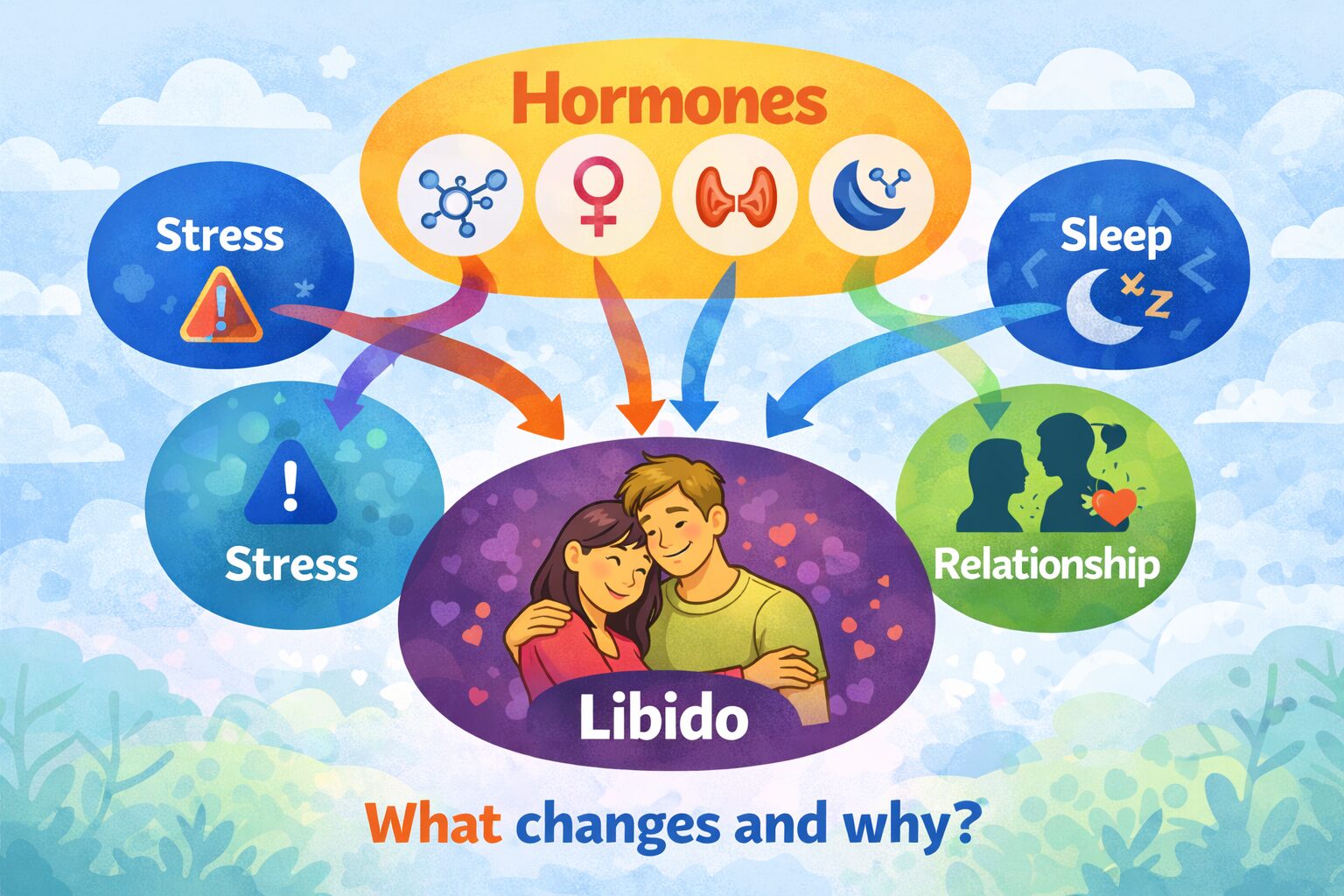
Libido—your interest in sexual connection and intimacy—often changes across weeks, months, and life stages. Many people worry that a lower (or higher) libido means something is “wrong.” Usually, it doesn’t. Libido is influenced by hormones, stress, sleep, relationship dynamics, mental health, medications, and overall wellbeing.
This guide explains the role hormones can play in libido, why libido changes are common, what’s typical across life stages, how to support healthy libido without pressure, and when it’s time to seek professional help.
Quick Answer (Featured Snippet)
Hormones can influence libido by affecting mood, energy, stress response, and physical comfort—but libido is never “just hormones.” Testosterone, estrogen, progesterone, thyroid hormones, and cortisol can all shift sexual interest indirectly through sleep, stress, vaginal/erectile comfort, and emotional wellbeing. Libido commonly changes with puberty, menstrual cycles, pregnancy/postpartum, aging, medications, and life stress. Persistent distress deserves professional support.
Key Takeaways
- Libido is influenced by hormones, but also stress, sleep, mood, and relationships.
- Testosterone, estrogen, thyroid, and cortisol shifts can affect interest indirectly.
- Cycle, pregnancy, postpartum, and menopause can change comfort and desire.
- Medications and mental health are common, fixable libido factors.
- Seek help if changes are sudden, distressing, painful, or persistent.
Table of Contents
- What Libido Means (Plain Explanation)
- Why It Matters (Real-Life Impact)
- The Science: Hormones That Influence Libido
- Common Life Stages and Scenarios (What Changes and Why)
- Step-by-Step: How to Support a Healthy Libido
- Common Myths and Mistakes
- Safety, Consent, and Boundaries
- When to See a Doctor or Professional Help
- FAQ
- Final Take + Next Step
1) What Libido Means (Plain Explanation)
Libido is your interest in sexual connection, intimacy, or sexual activity. It can show up as:
- spontaneous desire (it “appears” on its own), or
- responsive desire (it grows after closeness, affection, or a safe context)
Both are normal. Many people think libido should be spontaneous all the time. That expectation can create unnecessary anxiety.
Key point: Libido is not a moral measure, not a relationship score, and not a permanent trait. It’s a moving signal shaped by your body, mind, and environment.
2) Why It Matters (Real-Life Impact)
Libido changes can affect:
- self-esteem (“What’s wrong with me?”)
- relationships (mismatch, pressure, misunderstandings)
- mental health (anxiety, shame, avoidance)
- healthcare (ignoring treatable issues like thyroid problems, depression, pain)
When libido drops, people often blame themselves or their partner. When it rises, some people feel “out of control” or ashamed. Both reactions are usually based on myths.
Clear education helps you:
- reduce shame
- identify fixable factors
- talk about needs without pressure
- seek help when needed
[Internal link: Anatomy 101 (Vulva/Vagina, Penis/Testes, Clitoris, Pelvic Floor)]
[Internal link: Sexual Development Across Life Stages (Puberty → Adulthood)]
3) The Science: Hormones That Influence Libido
Hormones affect libido mainly by influencing energy, mood, stress, and physical comfort. Here are the key players.
Testosterone (in everyone)
Testosterone is present in all bodies, typically at different levels. It can influence:
- sexual interest for some people
- energy and motivation
- mood and confidence
But it’s not a simple on/off switch. Some people have “normal” testosterone and low libido due to stress, depression, or relationship strain. Others have lower testosterone and feel fine.
Estrogen (often linked to comfort and lubrication)
Estrogen can influence:
- vaginal tissue comfort and elasticity
- lubrication and arousal comfort
- mood stability for some people
When estrogen drops (for example postpartum, during breastfeeding, or around menopause), some people experience dryness or discomfort. Pain or discomfort can lower libido because the body naturally avoids experiences that don’t feel safe or comfortable.
Progesterone (often linked to cycle-related shifts)
Progesterone rises after ovulation in a typical menstrual cycle. Some people notice:
- changes in mood or energy
- shifts in desire
- changes in sleep quality
There’s no universal pattern. What matters is noticing your own trends without judging them.
Thyroid hormones (energy and overall functioning)
Thyroid hormone levels affect:
- energy and fatigue
- mood
- metabolism
- menstrual regularity (for some)
Both underactive and overactive thyroid issues can affect libido indirectly through fatigue, anxiety, or mood changes.
Cortisol (stress hormone)
Cortisol rises with stress. Short-term stress can increase desire for some people, but chronic stress often:
- reduces libido
- disrupts sleep
- increases anxiety
- lowers energy
- reduces emotional availability
Libido commonly drops when the nervous system stays in “survival mode.”
Prolactin (often relevant postpartum/breastfeeding)
Prolactin rises with breastfeeding and can suppress ovulation in some people. Many experience:
- lower libido
- dryness or discomfort
- intense fatigue
This is not failure—it’s biology plus exhaustion.
4) Common Life Stages and Scenarios (What Changes and Why)
Puberty and adolescence
Hormones surge and fluctuate. Libido and attraction can:
- appear suddenly
- feel confusing or intense
- vary day-to-day
What helps: accurate education, boundaries, and consent skills.
Menstrual cycle changes (for people who cycle)
Some people notice higher libido around ovulation; others don’t. Some feel lower libido before a period due to:
- cramps
- mood changes
- fatigue
- body image discomfort
Tracking patterns can reduce stress and help you plan intimacy around comfort.
Pregnancy
Libido can change due to:
- nausea, fatigue, and body changes
- emotions about safety and identity
- physical discomfort
- relationship stress or closeness
There is no “right” pregnancy libido. People can have higher, lower, or fluctuating desire.
Postpartum and breastfeeding
This is one of the most common times for libido to drop. Reasons include:
- hormonal shifts (lower estrogen, higher prolactin)
- sleep deprivation (major libido killer)
- healing, pain, or pelvic floor changes
- mental load and identity shifts
- pressure and expectations
Support and patience matter more than “pushing through.”
Perimenopause and menopause
Hormone patterns shift, and estrogen can decline. Some people experience:
- changes in vaginal comfort and lubrication
- sleep disruption
- hot flashes
- mood changes
Libido may drop, stay stable, or even increase depending on stress, relationship factors, and symptom support.
Testosterone changes with age (often discussed in men, but not only)
Some people notice changes in:
- erections (people with penises)
- energy and motivation
- mood
- recovery after stress
But lifestyle factors (sleep, alcohol, exercise, mental health) are often as important as hormones.
Medications (a huge, overlooked factor)
Common libido-affecting medications can include:
- some antidepressants
- some blood pressure medications
- hormonal contraception (for some people)
- certain pain medications
If libido changed after starting a medication, it’s worth discussing alternatives with a clinician. Never stop a prescribed medication abruptly without guidance.
Mental health and relationship context
Depression, anxiety, trauma, and ongoing conflict can reduce libido. Libido often improves when:
- stress decreases
- sleep improves
- communication becomes safer
- pain is addressed
- pressure is removed
Libido is strongly connected to emotional safety.
5) Step-by-Step: How to Support a Healthy Libido
This section focuses on realistic, non-pressuring steps that support wellbeing and intimacy.
Step 1: Define what “libido” means for you
Ask yourself:
- Do I want more desire, or more closeness?
- Is the issue interest, arousal comfort, or relationship tension?
- Is there pain, dryness, or anxiety?
Different causes need different solutions.
Step 2: Remove pressure (pressure lowers libido)
Pressure can look like:
- “We never do it anymore.”
- guilt or sulking
- persistent asking after a no
- treating libido as a relationship test
Replace pressure with:
- “I miss closeness—how can we connect in a way that feels good for you?”
Step 3: Fix the basics first (sleep, stress, pain)
Libido often improves when:
- sleep is consistent
- stress is reduced
- pain is treated
- alcohol is moderated
- movement/exercise supports mood and energy
Checklist: libido-friendly foundations
- ☐ 7–9 hours sleep (or as close as possible)
- ☐ stress relief routine (walk, breathing, therapy, journaling)
- ☐ address pain/dryness with professional guidance
- ☐ reduce alcohol and nicotine if relevant
- ☐ regular movement and strength training
- ☐ time for connection that isn’t sexual (touch, talk, laughter)
Step 4: Use “responsive desire” strategies
If spontaneous desire is low, you can support responsive desire by building conditions:
- low-pressure affection
- time without distractions
- feeling emotionally safe
- comfortable environment
- clear consent and check-ins
This is not manipulation. It’s creating the context where desire can appear naturally.
Step 5: Track patterns without obsessing
If you menstruate, track:
- energy and mood
- sleep
- cramps or discomfort
- desire trends
If you don’t, track:
- stress levels
- relationship conflict
- medication changes
- major life events
Patterns can reveal fixable causes.
Step 6: Talk with a clinician when needed
If libido changes are distressing or sudden, discuss:
- thyroid screening
- iron and vitamin deficiencies
- hormone-related symptoms
- medication side effects
- depression/anxiety screening
- pain evaluation
- pelvic floor assessment (if pain or pressure exists)
6) Common Myths and Mistakes
Myth vs Fact (Decision Table)
| Myth | Fact | Better next step |
|---|---|---|
| “Low libido means you don’t love your partner.” | Libido can drop from stress, sleep, pain, hormones. | Address causes; reduce pressure; talk kindly. |
| “Testosterone alone fixes everything.” | Libido is multi-factorial. | Look at stress, mood, meds, relationship safety. |
| “If desire isn’t spontaneous, it’s fake.” | Responsive desire is normal. | Build context and check in with consent. |
| “You should ‘push through’ discomfort.” | Pain is a signal to stop and evaluate. | Treat pain; consult a professional. |
| “A mismatch means the relationship is doomed.” | Mismatches are common and workable. | Collaborate on connection and expectations. |
Common mistakes
- Treating libido as a scoreboard
Better: focus on connection, safety, and mutual satisfaction. - Ignoring pain or dryness
Better: address comfort early—pain shuts down desire. - Not considering medication effects
Better: review meds with a clinician. - Assuming the higher-libido partner is always “right”
Better: both needs matter; consent is non-negotiable.
7) Safety, Consent, and Boundaries
Libido and consent are connected but not the same. You can love someone and still not want sex. You can have high libido and still need boundaries.
Healthy intimacy includes:
- consent that’s clear and ongoing
- respect for “no,” “not now,” and “I’m not sure”
- no coercion, guilt, or threats
- space to change your mind
- boundaries around sleep, health, and emotional bandwidth
If you feel pressured, unsafe, or obligated, libido often drops—and that’s protective.
[Internal link: Sexual Consent Basics—Clear, Practical Guide]
[Internal link: Healthy Communication in Relationships]
8) When to See a Doctor or Professional Help
Many libido shifts are normal. But it’s worth seeking help if changes are distressing, sudden, or linked to symptoms.
Red flags (seek evaluation)
- sudden, unexplained drop in libido
- persistent fatigue, depression, or anxiety
- pain during intercourse or pelvic pain
- significant vaginal dryness or bleeding
- erectile changes that are sudden or distressing
- symptoms of thyroid issues (major weight changes, heat/cold intolerance, heart racing)
- relationship coercion, fear, or control
- postpartum distress, depression, or severe anxiety
Brief safety note: If you feel unsafe or coerced, prioritize immediate safety and contact local emergency services or a trusted support professional.
9) FAQ
1) Is it normal for libido to change monthly?
Yes. Many people notice changes with stress, sleep, work demands, and (for some) menstrual cycle shifts. Libido can be higher at certain times and lower at others. What matters is whether the change is distressing or linked to pain or other symptoms.
2) Is it normal to have lower libido postpartum?
Yes. Postpartum libido changes are extremely common due to hormonal shifts, healing, fatigue, mental load, and identity changes. Pressure usually makes it worse. Focus on rest, comfort, and gentle connection. Seek help if there is severe sadness, anxiety, or pain.
3) Can hormones cause sudden loss of libido?
They can contribute, but sudden changes also commonly involve stress, depression, thyroid issues, medication changes, or relationship safety concerns. If the change is sudden and persists, a clinician can help evaluate likely causes and rule out medical issues.
4) What should I do if my partner wants more sex?
Start with a non-blaming conversation: “I care about you and I want closeness, but my desire has been low.” Explore what kind of closeness feels good now and remove pressure. If mismatch creates conflict, a therapist can help you negotiate respectfully.
5) Does birth control lower libido?
For some people it can, while others notice no change or even improvement. Effects vary by method, dose, and individual sensitivity. If you suspect a link, talk with a clinician about alternatives. Never stop a prescribed method without a plan that matches your goals.
6) Can stress really lower libido that much?
Yes. Chronic stress raises cortisol, disrupts sleep, and reduces emotional bandwidth. Libido often drops when your nervous system feels unsafe or exhausted. Addressing stress, improving sleep, and reducing pressure can improve desire more than focusing on hormones alone.
7) Is low libido always a medical problem?
Not always. Libido shifts can be a normal response to life changes, grief, burnout, conflict, or exhaustion. It becomes a medical concern when it’s persistent, distressing, or linked to symptoms like pain, bleeding, or severe mood changes.
8) When should I get hormone testing?
Consider it if libido changes are persistent and distressing, especially with other symptoms like fatigue, mood changes, menstrual irregularity, hot flashes, or erectile changes. A clinician can decide which tests are appropriate (thyroid, iron, hormones) based on your symptoms and history.
10) Final Take + Next Step
Hormones can influence libido—but libido is bigger than hormones. It responds to stress, sleep, mental health, relationship safety, comfort, and life stage changes. Most shifts are normal. The goal is not to “force” libido—it’s to support wellbeing and create conditions where desire can return naturally.
Next step: Pick one low-effort improvement this week:
- protect sleep time
- schedule a stress reset (walk, early night, therapy session)
- remove pressure and add non-sexual closeness
- book a clinician visit if symptoms or distress persist