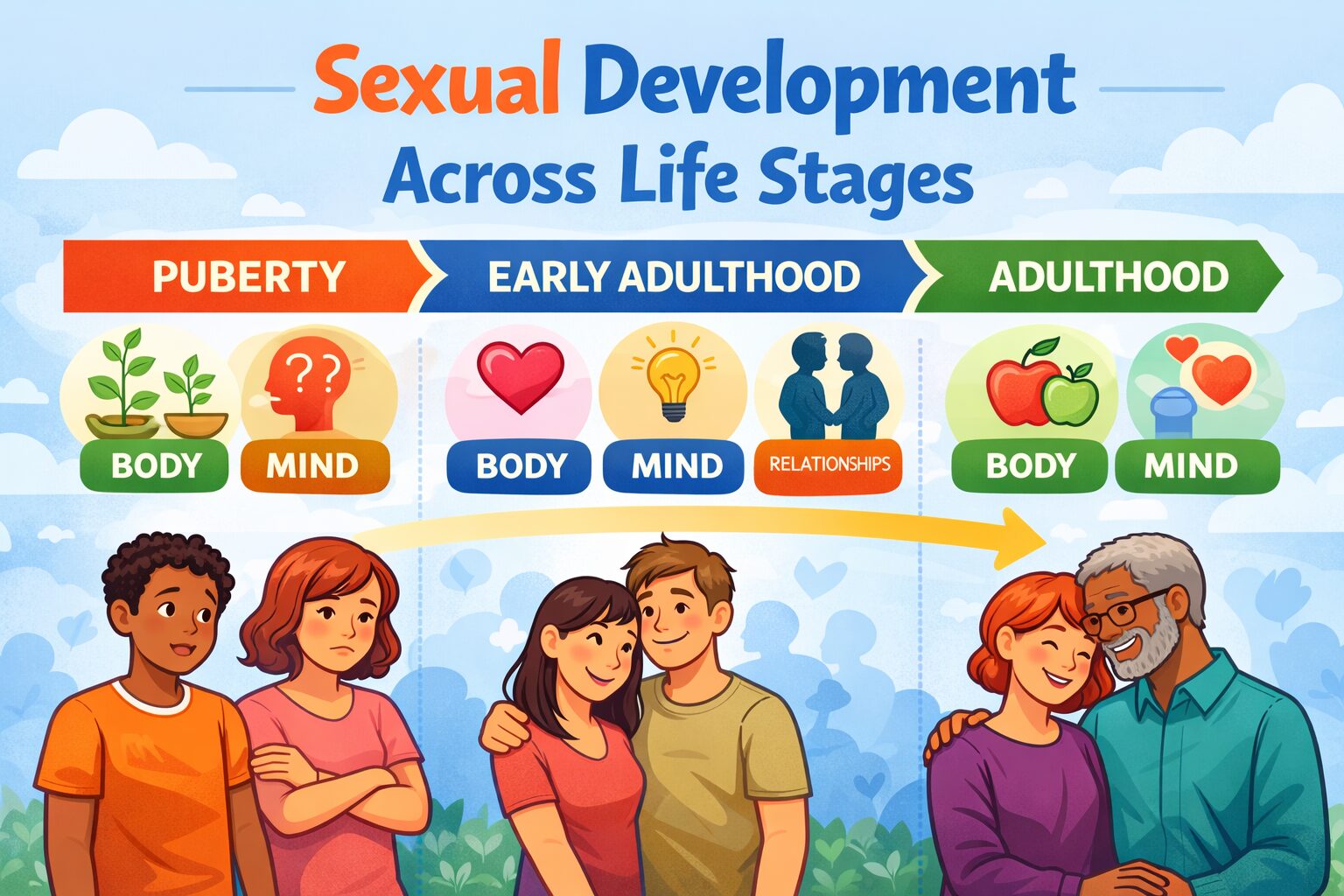
Sexual development is not one “switch” that flips at puberty. It’s a lifelong process that includes physical changes, emotions, identity, relationships, boundaries, and the skills we learn to stay safe and healthy. People develop at different speeds. Some changes arrive early, some later—and that variation is normal.
This guide explains what sexual development can look like from puberty through adulthood in a clear, non-graphic, stigma-free way. You’ll learn what’s typical, what can vary, how to support healthy development, and when to seek professional help.
Quick Answer (Featured Snippet)
Sexual development across life stages is the gradual process of physical, emotional, and social changes that shape how people experience their bodies, attraction, relationships, and boundaries—from puberty into adulthood. It includes puberty changes, learning consent and communication, building identity, and developing healthy relationship skills. Development varies widely, and supportive education plus trusted healthcare guidance can help.
Key Takeaways
- Sexual development includes body changes, emotions, identity, and relationship skills.
- Puberty timing and experiences vary widely and can still be normal.
- Consent, boundaries, and communication are core skills at every stage.
- Media and peers influence expectations—critical thinking protects wellbeing.
- Seek professional help for pain, distress, coercion, or concerning changes.
Table of Contents
- What Sexual Development Means (Plain Explanation)
- Why It Matters (Real-Life Impact)
- The Science / Basics You Need to Know
- Life Stages: Puberty → Early Adulthood → Adulthood
- Step-by-Step: How to Support Healthy Development
- Common Myths and Mistakes
- Safety, Consent, and Boundaries
- When to See a Doctor or Professional Help
- FAQ
- Final Take + Next Step
1) What Sexual Development Means (Plain Explanation)
Sexual development is the lifelong process of changes that affect:
- Body: puberty, hormones, growth, sexual and reproductive anatomy
- Mind: curiosity, attraction, comfort, values, identity
- Emotions: self-esteem, feelings about intimacy, stress and safety
- Social life: relationships, communication, boundaries, peer influences
It does not mean “sexual activity.” People can develop physically and emotionally without being sexually active, and many choose to delay or avoid sexual activity entirely. Sexual development is about capacity, awareness, and skills—not a requirement to do anything.
Key idea: development is not a straight line
Some people hit puberty early, some late. Some feel attraction early, some later, and some rarely or never. Some people date in adolescence, others don’t. All of these patterns can be normal.
2) Why It Matters (Real-Life Impact)
Understanding sexual development helps people:
- feel less anxious about body changes
- recognize what’s typical vs what needs medical attention
- build healthy boundaries and relationship skills
- avoid shame and misinformation
- reduce vulnerability to pressure, coercion, or risky choices
When people don’t get clear, age-appropriate information, they often learn from:
- peers (incomplete or incorrect)
- social media (performative, edited, sensational)
- pornography (not designed for education or consent)
Accurate, practical education supports healthier decisions and safer relationships later.
3) The Science / Basics You Need to Know
Hormones: the “messengers” that drive change
During puberty, the brain increases signals to the glands that produce hormones. These hormones influence:
- growth spurts
- hair growth patterns
- skin changes (including acne)
- voice changes (for some)
- menstrual cycles (for people who menstruate)
- erections and ejaculation (for people with testes)
- shifts in mood, energy, and sleep
Hormones don’t create a single “right” experience. They create a range of normal.
Brain development matters too
Adolescence includes major brain development in areas linked to:
- impulse control
- risk assessment
- emotional regulation
- social belonging
That’s why teens may feel emotions intensely and care deeply about peer approval. This isn’t “bad behavior”—it’s development. It also means teens benefit from:
- clear boundaries
- accurate information
- supportive adults
- consent and safety skills
Variation is normal—and expected
Two people can be healthy and have completely different timelines. “Normal” is a wide range.
A helpful mindset:
- Trends are common
- Timelines vary
- Distress and pain deserve attention
4) Life Stages: Puberty → Early Adulthood → Adulthood
Puberty (roughly ages 8–14 start, varies widely)
Puberty is the stage of body changes that prepare the body for reproduction, but it also brings social and emotional shifts.
Common physical changes (varies by person):
- growth spurt
- body hair changes
- sweat and body odor changes
- skin changes (acne)
- breast development for some
- voice changes for some
- menstruation begins for some
- erections become more frequent for some
Common emotional/social changes:
- stronger desire for privacy
- curiosity about bodies and relationships
- sensitivity to embarrassment or judgment
- new attractions or romantic feelings (or none)
- comparing yourself to peers
What supports healthy puberty:
- knowing changes are normal and varied
- accurate names for body parts and functions
- guidance on hygiene and self-care
- adults who answer questions without shame
Green flags: curiosity, wanting privacy, gradual body changes
Yellow flags: extreme distress, bullying, intense shame
Red flags: pain, sudden severe symptoms, signs of coercion or abuse
Mid-to-late adolescence (roughly ages 14–19)
This stage often includes:
- more stable puberty changes
- exploring identity and values
- increased interest in dating and intimacy for some
- stronger peer influence
- learning how to handle pressure
Skills that matter most here:
- consent and boundaries
- how to say no without guilt
- how to hear no respectfully
- how to spot pressure and coercion
- digital safety (privacy, images, messaging)
- health literacy (where to get trustworthy info)
Common experiences (normal range):
- dating or not dating
- strong crushes
- uncertainty about identity
- experimenting with style or friend groups
- learning from mistakes and awkward moments
This stage is less about “being mature” and more about learning skills safely.
Early adulthood (roughly ages 20–29, flexible)
Early adulthood often involves:
- deeper relationships for some
- new independence and values
- learning what you enjoy emotionally in relationships
- navigating work stress and mental health impacts
- strengthening communication
Key themes:
- choosing partners and relationships that align with your values
- balancing independence and intimacy
- understanding contraception and STI prevention (if relevant)
- learning healthy conflict skills
- understanding that boundaries are a sign of maturity, not rejection
Many people also do “catch-up learning” in early adulthood—unlearning myths and building better communication.
Adulthood (30+ and beyond)
Sexual development doesn’t stop. It shifts with:
- stress and sleep
- health conditions
- medications
- pregnancy/postpartum changes (for some)
- aging and hormone changes
- relationship dynamics
- mental health and life events
Normal shifts can include:
- changes in desire (higher or lower)
- changes in comfort, sensitivity, and energy
- shifting priorities (emotional connection, trust, stability)
Healthy adult development includes:
- ongoing consent and communication
- respect for changing needs
- getting medical support when something feels off
- building intimacy that fits your life, not someone else’s script
5) Step-by-Step: How to Support Healthy Development
This applies whether you’re supporting yourself, a teen, or a family member.
Step 1: Normalize variation
Use language like:
- “People develop at different speeds.”
- “There’s a wide range of normal.”
- “We can always ask a doctor if you’re worried.”
Step 2: Teach body literacy (age-appropriate)
Body literacy includes:
- correct anatomy terms
- what puberty changes mean
- basic reproductive health (when age-appropriate)
- hygiene and self-care
Step 3: Build consent and boundary skills early
Start with everyday examples:
- “You can say no to hugs.”
- “Stop means stop.”
- “We ask before touching.”
Later, expand to relationships:
- checking in
- respecting “not sure”
- recognizing pressure
Step 4: Strengthen media literacy
Teach people to ask:
- “Who made this content and why?”
- “Is it realistic or edited?”
- “Does it show consent and respect?”
Step 5: Create a help-seeking plan
Everyone should know:
- one trusted adult
- one healthcare option
- what to do if they feel unsafe
- how to get support without shame
Quick checklist: Healthy development support
- ☐ Accurate, shame-free information
- ☐ Consent and boundaries taught repeatedly
- ☐ Safe adults for questions
- ☐ Privacy respected
- ☐ Online safety discussed
- ☐ Health services accessible
- ☐ Support for distress, bullying, or coercion
6) Common Myths and Mistakes
Myth vs Fact (Decision Table)
| Myth | Fact | Better next step |
|---|---|---|
| “Everyone develops at the same time.” | Puberty timing varies widely. | Focus on health, not comparison. |
| “If they’re curious, they’re ‘too sexual.’” | Curiosity is normal development. | Answer calmly, age-appropriately. |
| “Talking about it encourages behavior.” | Education supports safety and boundaries. | Teach consent, respect, and options. |
| “Desire should be constant.” | Desire changes across life and stress. | Communicate and adapt without blame. |
| “Adults stop developing sexually.” | Bodies and needs change across adulthood. | Keep learning and checking in. |
Common mistakes
- Using shame to control behavior
Better: teach skills and values without humiliation. - Ignoring mental health and stress
Better: recognize stress affects desire, comfort, and relationships. - Assuming one model fits everyone
Better: respect different identities, timelines, and choices. - Skipping consent education
Better: make consent an everyday skill, not a crisis topic.
7) Safety, Consent, and Boundaries
Consent and boundaries should be taught as lifelong skills.
Consent basics:
- clear, voluntary agreement
- specific to the activity
- can be withdrawn anytime
- not valid under pressure or impairment
Boundaries basics:
- you can say no without a reason
- you can change your mind
- respectful people don’t punish boundaries
- pressure is a red flag
Digital safety basics:
- don’t share private content without permission
- don’t pressure others for images or messages
- keep privacy settings strong
- seek help if something is shared without consent
[Internal link: Consent Basics for Teens and Adults]
[Internal link: Digital Boundaries and Online Safety]
8) When to See a Doctor or Professional Help
Most development differences are normal, but some situations deserve professional support.
Red flags (get help sooner rather than later)
- persistent pain (pelvic, genital, or during menstruation)
- heavy bleeding or fainting with periods
- sudden major changes in sexual function or comfort
- signs of infection (unusual discharge, burning, sores, fever)
- intense anxiety, panic, or distress linked to intimacy or body changes
- signs of coercion, abuse, or unsafe relationships
- self-harm thoughts or severe depression
Brief safety note: If anyone feels in immediate danger, prioritize safety and contact local emergency services.
Who can help
- primary care doctor or pediatrician
- gynecologist or urologist (depending on needs)
- sexual health clinic
- therapist/counselor (especially for anxiety, trauma, relationship stress)
Getting help is not “overreacting.” It’s responsible.
9) FAQ
1) Is it normal to start puberty earlier or later?
Yes. Puberty timing varies widely. Genetics, nutrition, health conditions, and environment can influence timing. If puberty seems very early, very late, or causes intense distress, it’s reasonable to talk with a pediatrician for reassurance and guidance.
2) Is it normal to feel curious but also embarrassed?
Yes. Curiosity is common, and embarrassment is common too—especially during adolescence when peer judgment can feel intense. Shame isn’t helpful, but it’s understandable. Supportive adults and accurate information can reduce anxiety and normalize healthy learning.
3) Is it normal not to want dating in adolescence?
Yes. Some teens are very interested in dating; others aren’t. Social pressure can make people feel “behind,” but there’s no required timeline. What matters is feeling respected and having space to develop at your own pace.
4) What should I do if puberty changes feel scary?
Start with simple, reliable information and a trusted adult conversation. Ask about what’s normal and what to expect next. If fear is intense, persistent, or linked to bullying or body image distress, a pediatrician or counselor can help you feel safer and more confident.
5) Can stress affect desire and comfort in adulthood?
Yes. Stress, poor sleep, depression, anxiety, and relationship conflict can all affect desire and comfort. That doesn’t mean something is “wrong” with you. Gentle communication, health checkups, and mental health support can make a real difference.
6) How do I talk about boundaries without ruining closeness?
Use simple, kind language: “I like you, and I want to go slowly,” or “I’m not comfortable with that.” Healthy closeness includes respect for boundaries. If someone reacts with anger, guilt, or pressure, that’s a warning sign—not your fault.
7) Does sexual development include identity and emotions?
Yes. Sexual development includes how people understand attraction, identity, comfort, and relationship values. Some people have clear feelings early; others take longer. Identity exploration can be normal. Supportive, non-pressuring environments help people develop safely.
8) When should I seek professional help?
Seek help for pain, unusual symptoms, intense distress, coercion, or sudden changes that worry you. Also seek support if you feel unsafe or pressured in a relationship. Professionals can provide medical evaluation, mental health support, and safety planning.
10) Final Take + Next Step
Sexual development is a lifelong process shaped by biology, emotions, relationships, culture, and skills. Puberty is only the beginning. Through adolescence and adulthood, healthy development looks like body literacy, respect, consent, and communication—not rushing, comparing, or following a script.
Next step: Choose one area to strengthen this week:
- Learn one trusted fact about puberty or adult sexual health
- Practice one consent check-in phrase
- Make a help-seeking plan (who to talk to, where to go)