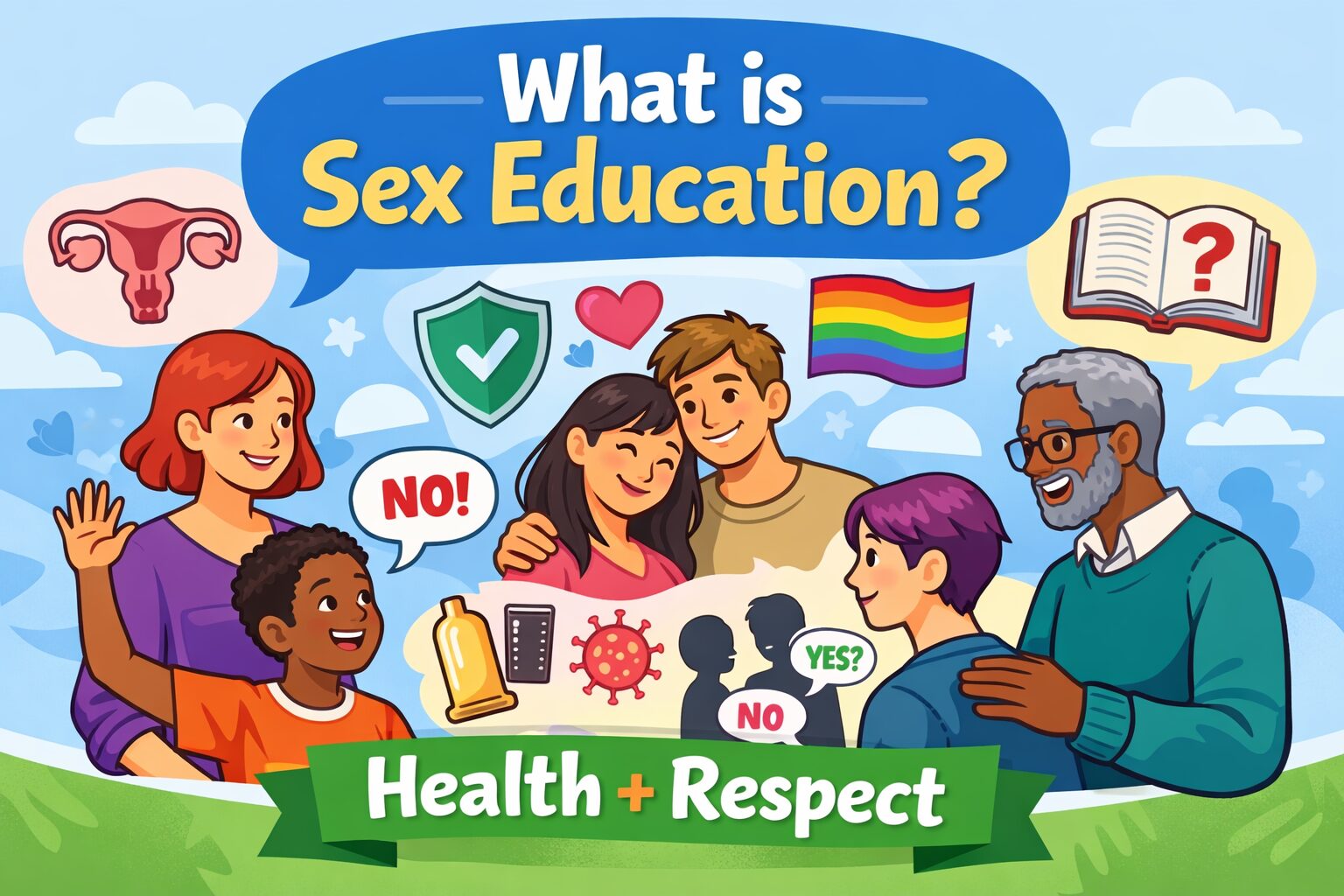
Sex education is one of the most misunderstood topics on the internet. Some people imagine it as “teaching kids how to have sex.” Others think it’s a political project. Many adults carry awkward memories of confusing school lessons, silence at home, or information picked up from peers and the internet.
Here’s the reality: sex education is health education. It helps people understand bodies, boundaries, relationships, safety, and respect—using age-appropriate language. It does not sexualize children. It does not replace parents. And it does not tell anyone what values they must hold.
This article explains what sex education truly is, what it isn’t, why it matters, and how to recognize high-quality, age-appropriate education—whether you’re a parent, educator, teen, or adult learner.
Quick Answer (Featured Snippet)
Sex education is age-appropriate education about bodies, relationships, consent, safety, and health. It teaches practical skills like naming body parts accurately, understanding boundaries, recognizing coercion, and preventing sexually transmitted infections and unintended pregnancy (when relevant by age). Sex education is not porn, not explicit instruction, and not “encouragement” to have sex—it’s guidance that supports health, safety, and respect.
Key Takeaways
- Sex education teaches health, safety, consent, and relationship skills—age appropriately.
- It is not explicit content, not porn, and not instruction for sexual activity.
- Good programs match developmental stages and focus on boundaries early.
- Consent and body autonomy are core topics for all ages.
- Clear education reduces harm, confusion, and shame across a lifetime.
Table of Contents
- What Sex Education Means (Plain Explanation)
- What Sex Education Is Not
- Why Sex Education Matters (Real-Life Impact)
- The Basics You Actually Need to Know
- Step-by-Step: How to Evaluate Sex Education Quality
- Common Myths and Mistakes
- Safety, Consent, and Boundaries
- When to Seek Professional Help
- FAQ
- Final Take + Next Step
1) What Sex Education Means (Plain Explanation)
Sex education is structured, age-appropriate learning about:
- The body and puberty
- Emotions and relationships
- Consent and personal boundaries
- Respect, empathy, and communication
- Sexual and reproductive health (later, when age-appropriate)
- Safety and help-seeking (how to get support)
At its best, sex education gives people language and skills:
- How to ask questions safely
- How to say “no” or “not yet”
- How to recognize pressure
- How to get help if something feels wrong
- How to make healthier choices later in life
It’s not one conversation. It’s a gradual learning path that starts with simple concepts (like body parts and boundaries) and expands as someone grows.
What “age-appropriate” really means
Age-appropriate doesn’t mean “never mention anything.” It means:
- Using the right level of detail for the child’s development
- Teaching safety and boundaries early
- Explaining puberty before it happens
- Introducing reproductive health later, with clear, factual language
A five-year-old learning “your body belongs to you” is sex education. A teenager learning how to avoid coercion and protect their health is also sex education. The content changes because the needs change.
2) What Sex Education Is Not
Let’s clear up the biggest misconceptions.
Sex education is NOT porn
Porn is entertainment content designed to arouse adults. It’s not made to teach consent, communication, anatomy, or safety. Sex education is the opposite: it is health and safety education grounded in wellbeing and respect.
Sex education is NOT explicit sexual instruction for children
Quality sex education for younger kids focuses on:
- correct names for body parts (for clarity and safety)
- privacy and boundaries
- trusted adults and help-seeking
- “safe touch / unsafe touch” concepts (without graphic detail)
Teaching explicit sexual techniques to children is not sex education. If you see content that feels graphic, it’s either poor-quality material or misinformation about what real programs do.
Sex education is NOT “encouragement to have sex”
Learning how bodies work does not “cause” sexual activity. Knowing about seatbelts doesn’t cause car crashes. Knowledge helps people make safer choices and recognize risks.
Good sex education often includes messages like:
- you can wait
- you can choose your own pace
- you never owe anyone intimacy
- respect and consent are non-negotiable
Sex education is NOT replacing parents’ values
Families hold different beliefs. Responsible education:
- teaches universal safety and respect (consent, boundaries, health)
- supports communication with trusted adults
- avoids shaming
- doesn’t pressure someone into one “right” life path
Parents can add their own values and guidance. Education provides a safe baseline so a child isn’t left with confusion or internet misinformation.
3) Why Sex Education Matters (Real-Life Impact)
Whether someone wants to admit it or not, people learn about sex somewhere. If it’s not from trusted adults or school, it often comes from:
- peers (often inaccurate)
- social media
- pornography
- random websites
- pressure-filled relationships
Sex education matters because it:
- reduces misinformation and shame
- increases body literacy and confidence
- improves consent and relationship communication
- supports health outcomes (STI prevention, pregnancy prevention where relevant)
- helps young people recognize coercion and abuse
- helps adults unlearn harmful myths
The harm of “no education”
When people grow up without education, common outcomes include:
- fear and shame around normal bodily changes
- higher vulnerability to pressure and manipulation
- delayed help-seeking after harm
- confusion about boundaries and consent
- risky choices made in secrecy
Silence doesn’t protect people. It often protects misinformation.
4) The Basics You Actually Need to Know
Sex education is broad. Here are the foundations that show up in high-quality programs.
Bodies and development (without shame)
People should learn:
- correct names for body parts
- what puberty is and what changes to expect
- normal variation in bodies (no “perfect” standard)
- hygiene and self-care
- emotions that can come with growth and attraction
This helps reduce panic, shame, and secrecy.
Consent and boundaries
Consent is a clear, voluntary agreement. It must be:
- freely given (no pressure)
- specific (one thing doesn’t mean everything)
- reversible (can change anytime)
- informed (understanding what’s happening)
Boundary skills include:
- saying no
- hearing no respectfully
- noticing discomfort
- pausing and checking in
Relationships and communication
People learn:
- how to handle crushes and rejection respectfully
- healthy vs unhealthy relationship patterns
- how to communicate needs
- respect for differences and identity
- conflict skills and emotional literacy
Sex education is often the first place someone hears: pressure is not love.
Health and safety (as age increases)
For older teens and adults, topics may include:
- STI basics: what they are and how prevention works
- pregnancy basics: how conception happens and prevention options
- healthcare access and talking to a clinician
- online safety and privacy
- how alcohol and impairment affect consent
This information can literally prevent lifelong consequences.
5) Step-by-Step: How to Evaluate Sex Education Quality
If you’re a parent, educator, or adult learner, you can evaluate a curriculum or resource quickly.
Step 1: Check the program’s goal
A good program aims to build:
- safety
- respect
- health literacy
- communication skills
- help-seeking confidence
If the “goal” is to shock, shame, or sensationalize, it’s not quality education.
Step 2: Look for age-appropriate structure
Ask:
- Does it start with body autonomy and boundaries for younger kids?
- Does it explain puberty before it happens?
- Does it add reproductive health details later?
Good sex education grows with the learner.
Step 3: Confirm consent is central
High-quality education always teaches:
- consent as active and ongoing
- coercion and pressure warning signs
- how to say no
- how to respect no
If consent is missing, that’s a serious gap.
Step 4: Watch for shame-based messaging
Avoid resources that rely on:
- fear
- humiliation
- gender stereotypes
- blaming language
- “purity” framing that labels people as ruined or dirty
Shame does not protect health; it blocks learning.
Step 5: Check inclusivity and realism
Inclusive education:
- recognizes different bodies and experiences
- avoids assuming everyone is straight, partnered, or sexually active
- uses respectful language
- emphasizes dignity and choice
Step 6: Make sure “help-seeking” is taught
Good sex education includes:
- who to talk to
- what to do if you feel unsafe
- how to report abuse
- how to access health services
That’s one of the most protective elements.
6) Common Myths and Mistakes
Myth vs Fact (Decision Table)
| Myth | Fact | What to do instead |
|---|---|---|
| “Sex ed teaches kids to have sex.” | It teaches safety, boundaries, and health literacy. | Ask what the curriculum actually covers. |
| “If we don’t talk about it, they won’t do it.” | Silence pushes learning to peers/internet. | Provide age-appropriate, factual guidance. |
| “Consent is obvious without words.” | People misread cues; pressure exists. | Teach clear, verbal check-ins and boundaries. |
| “Porn is a good teacher.” | Porn is entertainment, not education. | Teach media literacy and relationship skills. |
| “Only teens need sex education.” | Younger kids need boundaries and body autonomy. | Start early with simple safety concepts. |
Common mistakes adults make
- Waiting too long to start
Better: start with body autonomy and boundaries early. - One big “talk” instead of many small ones
Better: short, calm conversations over time. - Using shame or threats
Better: focus on safety, respect, and real-life skills. - Avoiding correct body terms
Better: use accurate language; it improves safety and clarity. - Assuming “my kid already knows”
Better: ask what they’ve heard and correct gently.
7) Safety, Consent, and Boundaries
Even if someone never plans to be sexually active soon, these topics matter because they protect people in everyday life.
Boundaries start small
Kids can learn:
- “No hugs right now” is okay
- “Stop tickling” must be respected
- private parts are private
- trusted adults can help
This creates a foundation for stronger consent later.
Consent is not just about sex
Consent also applies to:
- photos and sharing online
- personal space
- privacy
- touch in sports or social situations
- peer pressure in relationships
Online safety is now part of sex education
Modern sex education includes:
- not sharing intimate images without permission
- understanding digital pressure and manipulation
- privacy settings and safety planning
- what to do if something is shared without consent
This isn’t moral panic—it’s practical reality.
8) When to Seek Professional Help
Sometimes questions are bigger than a blog post. That’s normal.
Red flags (seek support)
Get help from a healthcare professional, counselor, or trusted support service if:
- a child shows sexual behavior that seems forced, distressing, or far beyond age norms
- someone reports being pressured, threatened, or coerced
- there’s pain, bleeding, injury, or signs of harm
- someone is extremely anxious, distressed, or shutting down after an experience
- there’s ongoing harassment, stalking, or digital abuse
Brief safety note: If anyone is in immediate danger, prioritize safety first and contact local emergency services.
If you’re a parent and feel overwhelmed
It’s okay to feel unsure. A pediatrician, school counselor, or qualified therapist can help you:
- choose age-appropriate language
- respond calmly to questions
- create a safe environment for ongoing conversation
9) FAQ
1) Is it normal for kids to ask about bodies?
Yes. Curiosity about bodies is common and developmentally normal. The healthiest response is calm, brief, age-appropriate answers using correct terms. If you feel unsure, you can say, “That’s a good question—let’s talk about it,” and follow up soon.
2) Is it normal to feel awkward as a parent?
Yes. Many adults didn’t receive good sex education themselves. Awkwardness doesn’t mean you’re doing harm—it means you’re learning. Start small, use simple language, and focus on safety and respect rather than trying to cover everything perfectly.
3) What should I do if my teen learns from porn?
Stay calm and focus on media literacy, not punishment. Porn isn’t designed to teach consent, communication, or realistic expectations. Ask what they’ve seen or believe, correct misinformation gently, and reinforce values like respect, boundaries, and mutual agreement.
4) Does sex education encourage earlier sexual activity?
High-quality, age-appropriate sex education focuses on safety, consent, and decision-making. It supports healthier choices and better communication. The goal is not to push anyone into activity, but to reduce harm and confusion when choices arise.
5) When should sex education start?
It can start early with body autonomy, correct body terms, privacy, and boundaries. Puberty education should begin before changes occur. As children grow, education expands to include relationships, consent, and later health topics like STI and pregnancy prevention.
6) How can schools and parents work together?
The best approach is teamwork. Schools can provide structured health education, while families provide values and personal guidance. Ask for curriculum outlines, discuss what your child is learning, and create a home environment where questions are welcomed without shame.
7) What if my child asks a question I can’t answer?
It’s okay to say, “I’m not sure—let’s find out together.” Use reputable health sources or consult a pediatrician or school nurse. What matters most is staying approachable, so your child keeps coming to you instead of relying only on peers.
8) How do I know if a resource is trustworthy?
Trustworthy resources are age-appropriate, non-sensational, consent-centered, and medically accurate. They avoid shame-based messaging and include help-seeking guidance. If a resource is graphic, fear-driven, or focused on shock value, it’s likely not educational-quality material.
10) Final Take + Next Step
Sex education is not about pushing sex. It’s about protecting people with knowledge and skills: body literacy, consent, boundaries, respect, communication, and help-seeking. It supports healthier relationships and safer choices—at every age.
Next step: Pick one small conversation starter you can actually use this week:
- “You can always say no to touch.”
- “If you’re unsure, you can ask questions.”
- “Your body belongs to you.”